Landing templates
Ready-made sites, sections and components — HTML, Tailwind CSS, React. Download instantly.
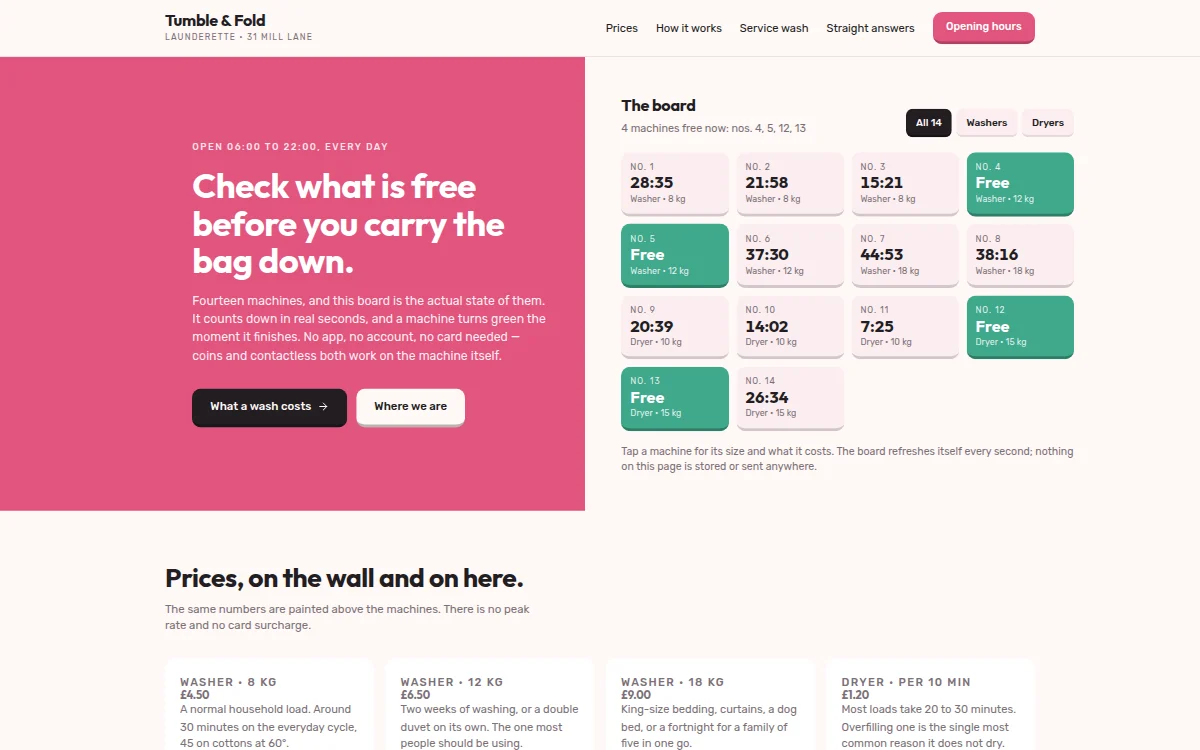
Tumble & Fold — Self-Service Launderette
A landing page for a launderette built around a live machine board: fourteen machines counting down in real seconds, turning green the moment they finish, with a next-free line that recomputes per filter and a detail readout when you tap one. Plus a split-screen hero, prices, service wash rates and straight answers.
 HTML5
HTML5  Tailwind CSS
  JavaScript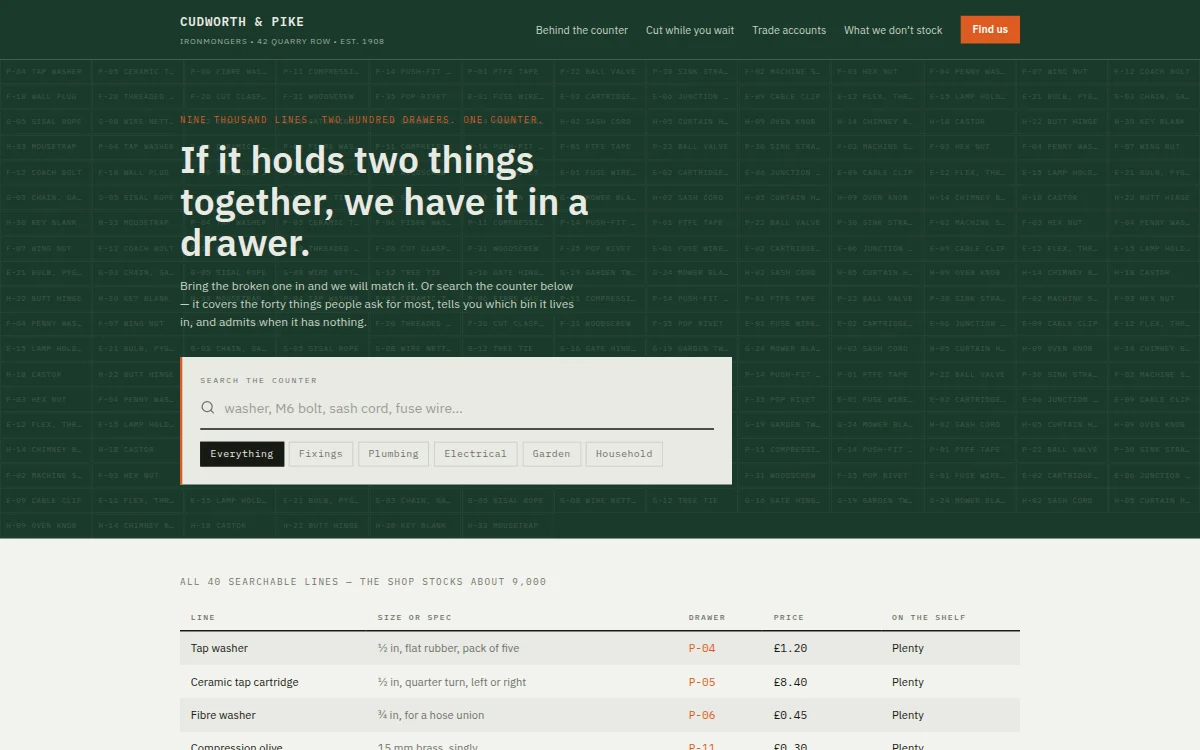
Cudworth & Pike — Ironmonger’s Parts Counter
A landing page for an ironmonger: a live search across forty stock lines that matches on synonyms too, shows the drawer, the price and what is on the shelf, and — when nothing matches — says honestly how little of the shop the search covers. Plus a cut-while-you-wait table, trade account terms and a list of what the shop deliberately does not stock.
HTML5 Tailwind CSS JavaScript 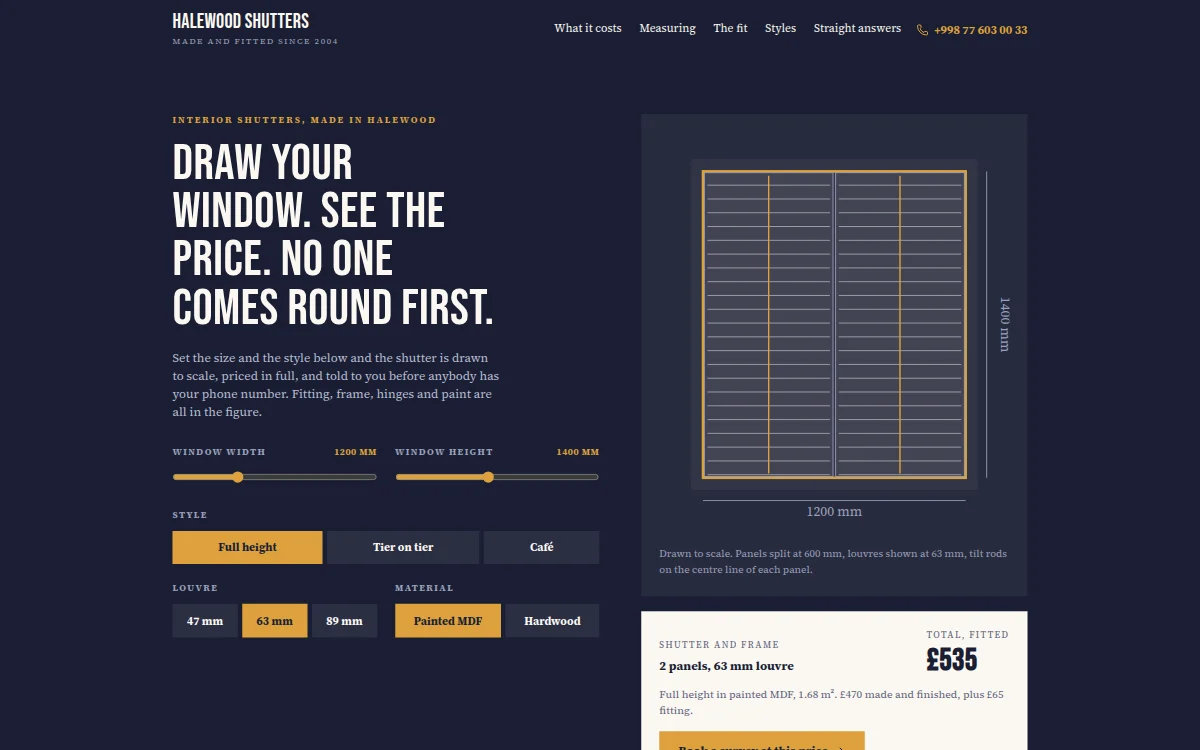
Halewood Shutters — Interior Shutters, Made and Fitted
A landing page for an interior shutter workshop: a configurator at the very top draws the shutter to scale in SVG from width, height, style, louvre and material, and prices it in full including fitting — with a measuring guide, the fitting timeline and an honest limits section.
HTML5 Tailwind CSS JavaScript 
The Sole Bench — Sneaker Restoration Workshop
A dark landing page for a sneaker cleaning and restoration workshop: a three-question condition grader that recommends a tier, prices it with the express surcharge, and says plainly which jobs the bench turns away — plus three tiers, a five-stage process rail and an honest limits list.
HTML5 Tailwind CSS JavaScript 
Northwater — Cold Water Recovery Studio
A landing page for a supervised cold-water and contrast therapy studio: a live weekly timetable with a day switcher, honest full states and a next-available slot, plus the session protocol, prices, a photo rail and a safety list.
HTML5 Tailwind CSS JavaScript 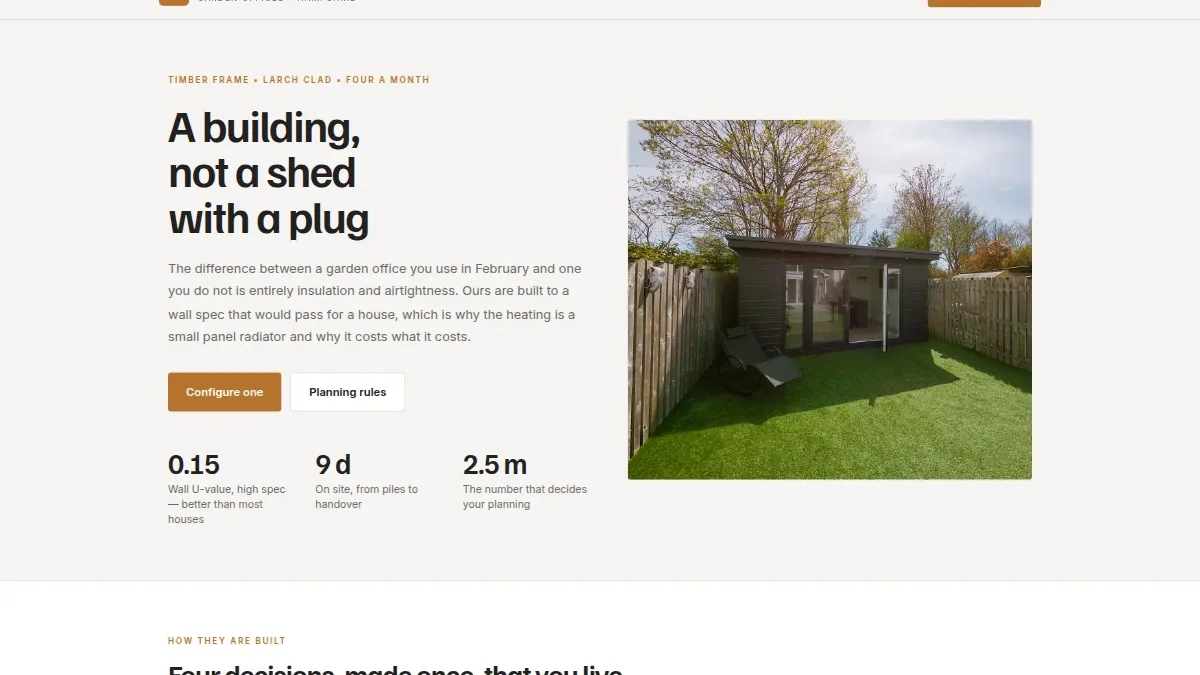
Sill & Frame — Garden Office Pods Landing Template
A one-page landing for a garden office builder: a configurator pricing the building by the square metre, drawing the plan with real wall thicknesses so the internal area is honest, and checking the design against permitted development — where the 2.5 m rule near a boundary decides almost everything.
HTML5 Tailwind CSS JavaScript